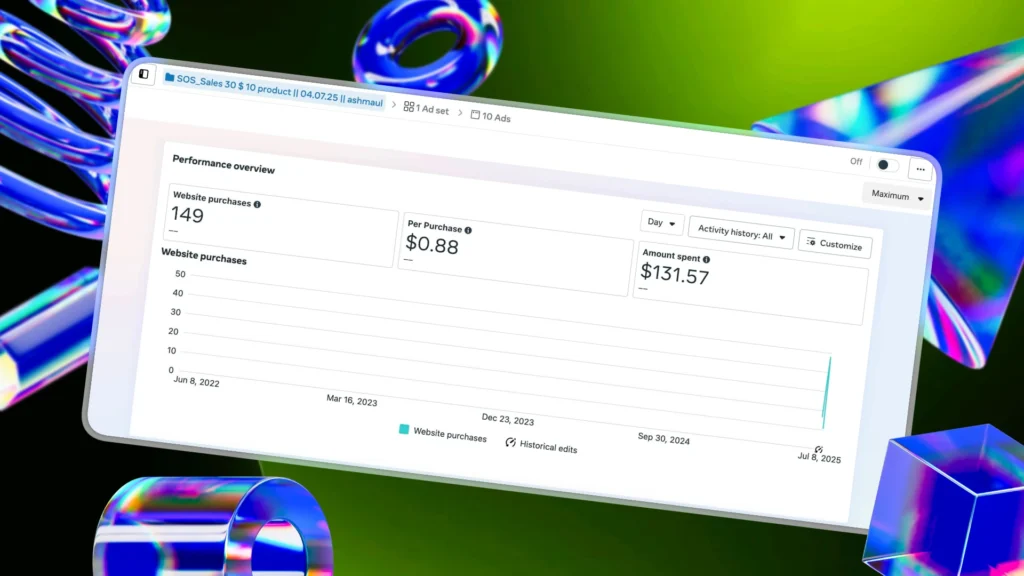
Welcome to a deep-dive low ticket Facebook ads case study. Discover the exact algorithmic and psychological media buying blueprint we used to generate 149 rapid-fire sales at a staggering $0.88 acquisition cost.
The diagnosis was immediately clear:
Over-Targeting: They were utilizing hyper-narrow interest targeting. This restricted Facebook’s machine learning and drove up auction costs.
Weak Copywriting: Their ad copy was heavily feature-focused instead of benefit-driven.
The Checkout Friction: The biggest conversion killer was the post-click experience.
Users were clicking the ad, but the landing page required them to fill out 12 different form fields just to buy a $10 item.
The cognitive load was destroying their conversion rate.
We completely tore down their existing infrastructure.
To turn this brand into a benchmark low ticket Facebook ads case study, we had to rebuild their system prioritizing speed, emotional triggers, and algorithmic freedom.
Here is the exact three-phase blueprint we executed:
Phase A: The ‘Thumb-Stopping’ Creative Formula
For an impulse buy, you have exactly 1.5 seconds to capture attention before the user scrolls past.
We replaced their polished, studio-quality images with raw, user-generated content (UGC) shot organically on an iPhone.
We layered aggressive, natively styled text overlays (similar to TikTok UI).
We highlighted the product’s primary benefit instantly within the first frame.
We completely removed lengthy product descriptions from the primary text.
Instead, our ad copy was formatted as a sharp, direct command: “The ultimate everyday essential. Under $15. Tap to grab yours before they sell out.”
Phase B: Algorithmic Liquidity & Broad Targeting
We stripped away all the complex, layered interest targeting that was driving up their CPMs.
We transitioned the account to a consolidated, broad targeting structure.
By leveraging Advantage+ Shopping Campaigns (ASC), we handed the reigns over to Meta’s machine learning.
This level of algorithmic trust is a crucial step in our low ticket Facebook ads case study methodology.
It allows the algorithm to find buyers based strictly on pixel data rather than arbitrary demographic constraints.
To protect the client’s razor-thin margins, we introduced strict Cost Cap bidding strategies. This commanded the algorithm to only bid in auctions where a sub-$2 CPA was statistically probable.
Phase C: The Frictionless Micro-Funnel
Driving cheap clicks means nothing if the landing page doesn’t convert.
We bypassed their bulky Shopify storefront entirely.
We directed traffic to a lightning-fast, single-product micro-landing page.
We stripped the navigation bar, removed the footer, and eliminated all distractions.
The only action a user could take was to buy.
Most importantly, we integrated Apple Pay, Google Pay, and Shop Pay directly onto the product page.
This allowed users to bypass the traditional add-to-cart phases, completing their purchase with a single biometric double-click.
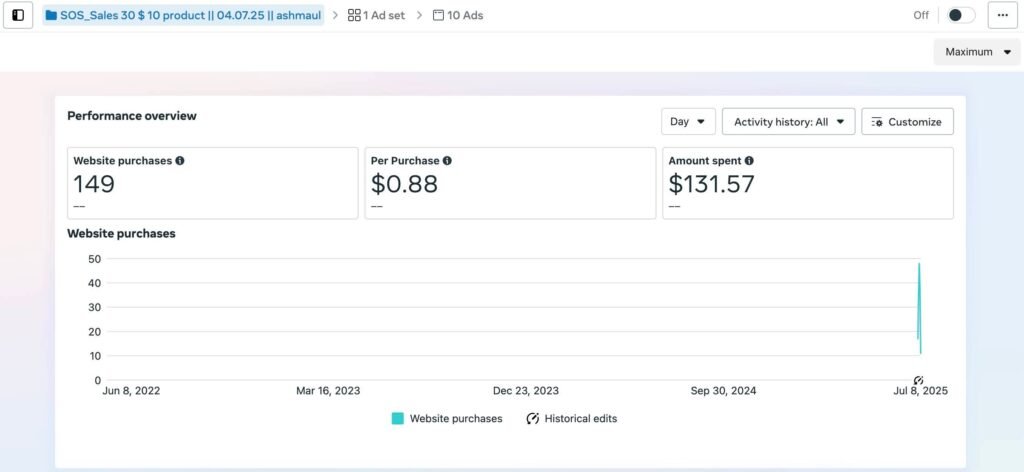
The dashboard screenshot attached to this low ticket Facebook ads case study illustrates the sheer power of aligning high-velocity creatives with a frictionless checkout experience.
Within a very short window, the algorithm stabilized. The CPMs plummeted, and the sales velocity skyrocketed beyond expectations.
Campaign Result Highlights:
149 Total Website Purchases: Captured rapidly through highly targeted, broad audience optimization.
$0.88 Cost Per Purchase: An astonishingly low CPA, yielding a monstrous return on ad spend (ROAS) for a $10 product.
$131.57 Total Ad Spend: Unparalleled capital efficiency. We generated significant top-line revenue without risking large media budgets.
11x+ Immediate ROAS: The combination of low CPMs and instant checkout options resulted in highly profitable day-one scaling.
Stop letting high acquisition costs eat into your profitability. If you want to deploy the high-velocity, algorithm-friendly strategies outlined in this low ticket Facebook ads case study, our team of senior media buyers is ready to audit your account and rebuild your funnel.